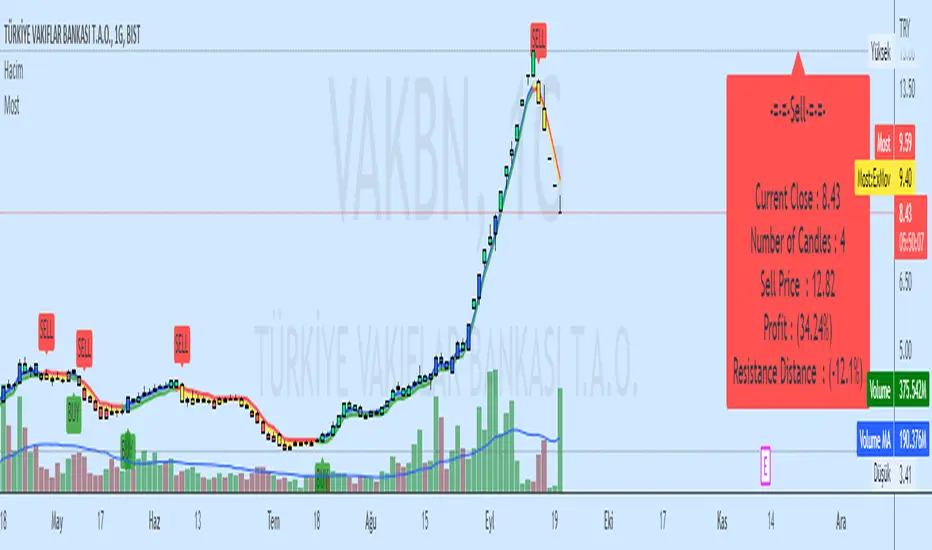
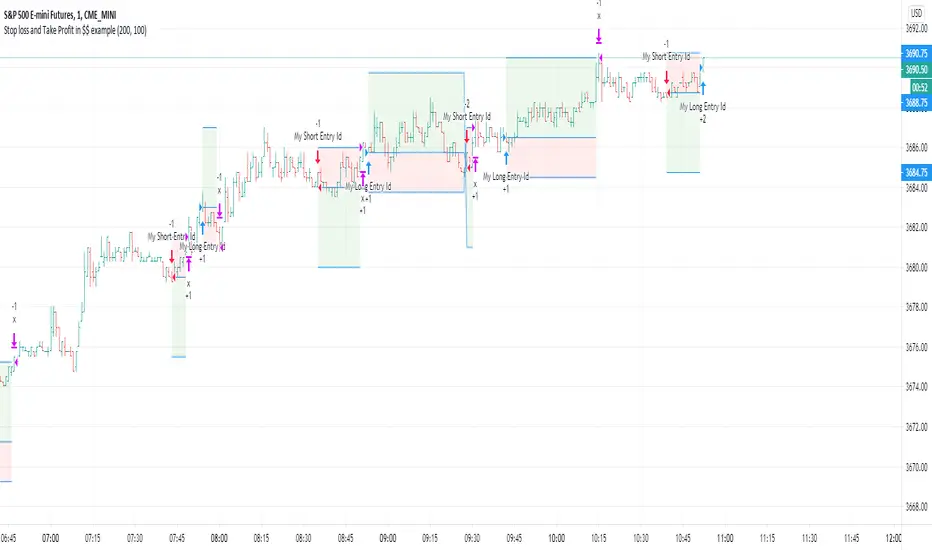
Break even stop loss (% of instrument price)Simply proof of concept to place a stop loss a percentage below entry price and move it to break even if the price moves the same percentage above the entre price.
Wyszukaj w skryptach "stop loss"
EMA and MACD with Trailing Stop Loss (by Coinrule)An exponential moving average ( EMA ) is a type of moving average (MA) that places a greater weight and significance on the most recent data points. The exponential moving average is also referred to as the exponentially weighted moving average. An exponentially weighted moving average reacts more significantly to recent price changes than a simple moving average simple moving average ( SMA ), which applies an equal weight to all observations in the period.
Moving average convergence divergence ( MACD ) is a trend-following momentum indicator that shows the relationship between two moving averages of a security’s price. The MACD is calculated by subtracting the 26-period exponential moving average ( EMA ) from the 12-period EMA.
The result of that calculation is the MACD line. A nine-day EMA of the MACD called the "signal line," is then plotted on top of the MACD line, which can function as a trigger for buy and sell signals. Traders may buy the security when the MACD crosses above its signal line and sell—or short—the security when the MACD crosses below the signal line. Moving average convergence divergence ( MACD ) indicators can be interpreted in several ways, but the more common methods are crossovers, divergences, and rapid rises/falls.
The Strategy enters and closes the trade when the following conditions are met:
LONG
The MACD histogram turns bearish
EMA7 is greater than EMA14
EXIT
Price increases 3% trailing
Price decreases 1% trailing
This strategy is back-tested from 1 January 2022 to simulate how the strategy would work in a bear market and provides good returns.
Pairs that produce very strong results include XRPUSDT on the 1-minute timeframe. This short timeframe means that this strategy opens and closes trades regularly
In order to further improve the strategy, the EMA can be changed from 7 and 14 to, say, EMA20 and EMA50. Furthermore, the trailing stop loss can also be changed to ideally suit the user to match their needs.
The strategy assumes each order is using 30% of the available coins to make the results more realistic and to simulate you only ran this strategy on 30% of your holdings. A trading fee of 0.1% is also taken into account and is aligned to the base fee applied on Binance.
Oversold RSI with Tight Stop-Loss Strategy (by Coinrule)KRAKEN:LINKUSD
This is one of the best strategies that can be used to get familiar with technical indicators and start to include them in your rules on Coinrule .
ENTRY
1. This trading system uses the RSI (Relative Strength Index) to anticipate good points to enter positions. RSI is a technical indicator frequently used in trading. It works by measuring the speed and change of price movements to determine whether a coin is oversold (indicating a good entry point) or overbought (indicating a point of exit/entry for a short position). The RSI oscillates between 0 and 100 and is traditionally considered overbought when over 70 and oversold when below 30.
2. To pick the right moment to buy, the strategy enters a trade when the RSI falls below 30 indicating the coin is oversold and primed for a trend reversal.
EXIT
The strategy then exits the position when the price appreciates 7% from the point of entry. The position also maintains a tight stop-loss and closes the position if the price depreciates 1% from the entry price. The idea behind this is to cut your losing trades fast and let your winners ride.
The best time frame for this strategy based on our back testing data is the daily. Shorter time frames can also work well on certain coins, however in our experience, the daily works best. Feel free to experiment with this script and test it on a variety of your coins! With our back testing data a trading fee of 0.1% is taken into account. The fee is aligned to the base fee applied on Binance, which is the largest cryptocurrency exchange by volume. In the example shown, this strategy made a handsome net profit of 52.6% on Chainlink with 66.67% of trades being profitable.
You can execute this strategy on your favorite exchanges with Coinrule .
isamuch - 2MA Cross and Stop Lossสัญญาณซื้อ/ขาย : มาจาก Moving Average สองเส้นตัดกัน
Stop Loss : มาจากราคาต่ำสุด/สูงสุดของช่วงระหว่าง Moving Average สองเส้นตัดกันก่อนหน้ากับ Moving Average ตัดกันปัจจุบัน
Parabolic SAR Strategy With take profit and stop lossDo not make it too difficult!
This is my first strategy! I took the Parabolic SAR Strategy and added Stop Loss and Take profit, and I can see some fantastic results in 2h-3h-4h on some of the Crypto coins.
This is for training only, and I do not recommend using it as part of a trading bot, however, I do myself.
MultiPrice AlertThis is an alert script using Pinescript version 4. This enables one to set 5 alerts (1 StopLoss, 4 Targets), on 3 different symbols, at using a single alert in the UI.
Every visible line will only appear on the symbols that are selected. After setting targets when making an alert, select this indicator as a condition. Change the name to whatever you want, usually the names of the set of tickers.
The Alert message is dyanmic showing which Symbol with each type of alert, at whatever price.
Ability to disable the targets + symbols.
Alerts work by Stop Loss crossing under price and Targets Cross Over. Enabling the "Short" Targets reverses this.
The line that is being displayed is actually the price of the asset being moved over x number of bars. I have not found a way to plot a traditional horizontal line, as the code for it uses a fixed price.
As it being a user input, it is a variable. Any help with this would be appreicated.
Alerts are set to once per bar.
Known bug that sometimes if the prices that you set are inside the current candle stick, then your alert will immeaditally fire, either change the timeframe or let it fire and wait fo
After a target is hit, I reccomend setting the alert to 0 and REMAKING the alert. You MUST REMAKE THE ALERT AFTER ANY CHANGES. This script WILL NOT CHANGE ALERTS AS YOU CHANGE SETTINGS.
TradingView Alerts are not this smart , at least I haven't found a way to do this yet.
Anti-Volume Stop Loss multi timeframe [LM]Hello Traders,
I would like to introduce you fork of popular indicator Anti-Volume Stop Loss created by Buff Dormeier and cracked here on tradingview by @Rafka so shout out to him. I have tried to crack it myself as well as I'm big fan of Dormeier's work but it's not easy so really big thanks to Rafka
I have refactored original script and have included multi timeframe setting.
As its shown below you can select higher timeframe to track lower one:
Enjoy!
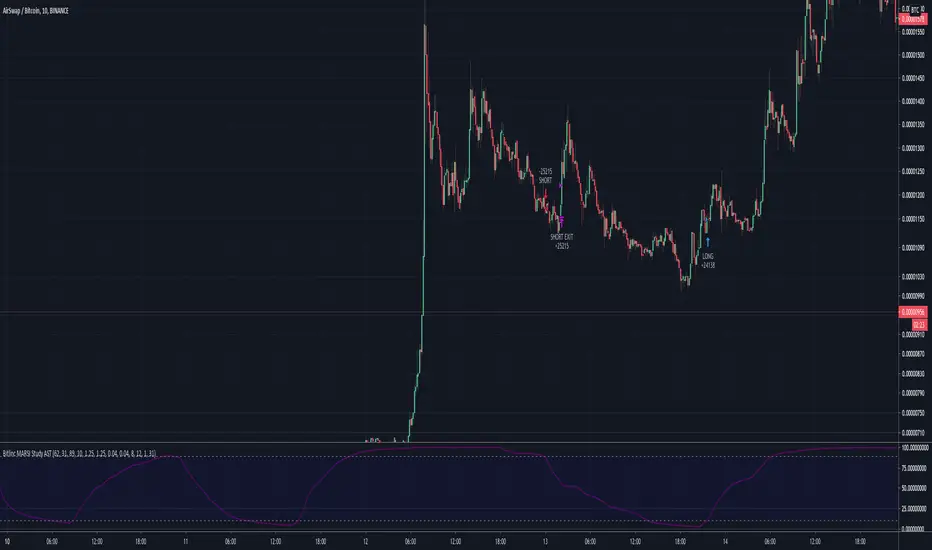
Bitlinc MARSI Study AST w/ Take Profit & Stop loss - beta 0.1This script is beta 0.1 - will update as soon as the script is tradable
This script is based on AST on a 10 minute timeframe. You can change the asset and the timeframe for any asset you want to trade, but for it to work correct ALL settings have to be testes in the Strategy section of the TradingView. Each assets and timeframe require a different mixture of settings. This is NOT a one settings fits all trading for all assets on any timeframe. Below are the settings and explanation on how it works.
How it fires a buy / sell:
The script will plot an RSI with upper and lower bands in a separate indicator window. The idea behind this script is to fire a LONG when MA crosses OVER lower band and fire a SHORT when the MA crosses under the lower band. Each order that fires is an OCO (Order Cancels Order) for pyramiding.
Settings:
You have full control of these settings as mentioned above, you must configure every part of this script for each asset and timeframe you trade.
- Length of MA
- Length
- Upper bands of RSI
- Lower bands of RSI
- Take profit percentage
- Stop loss percentage
- Month to start and end the strategy (within 2020)
- Day to start and end the strategy (within 2020)
- Quantity type
- Slippage
- Pyramiding
***Remember that after the signal to enter or exit a trade is fired, the alert will trigger AFTER the close of the candle that caused the tigger to fire
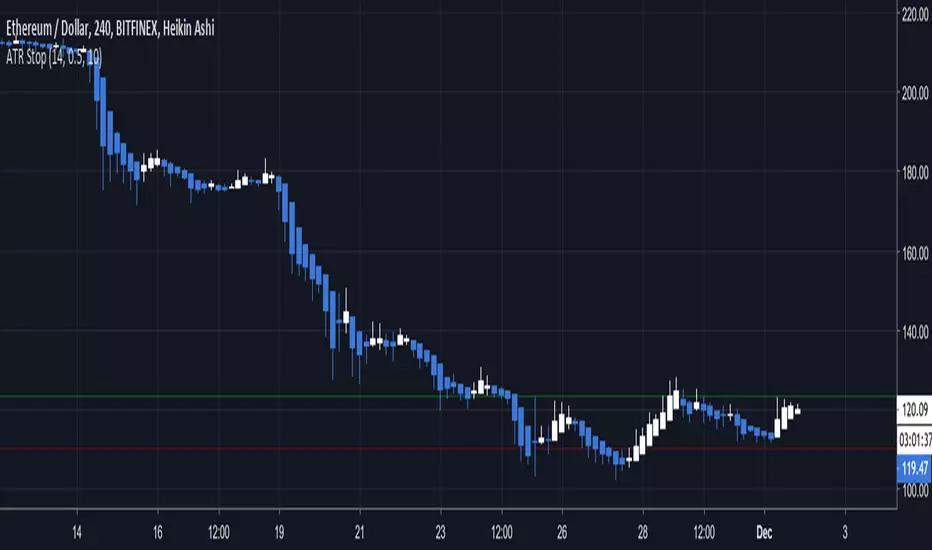
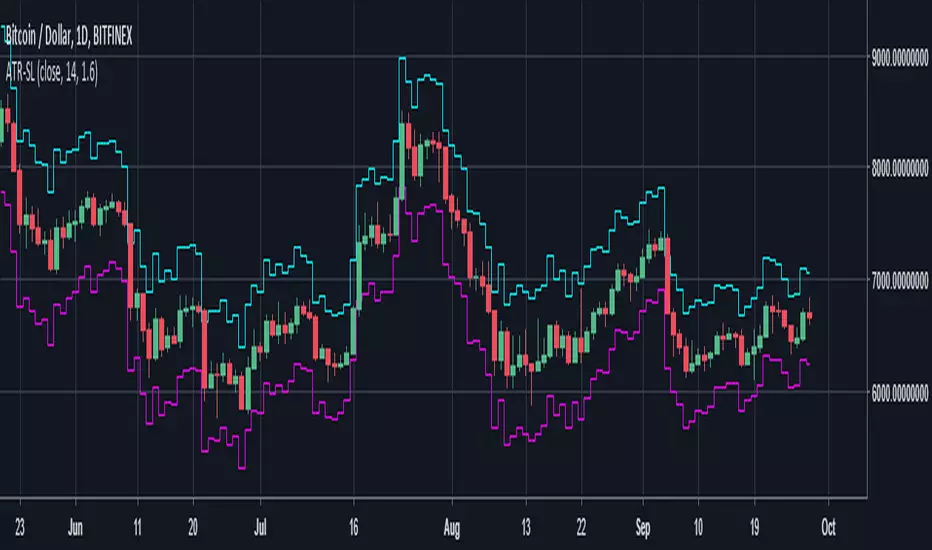
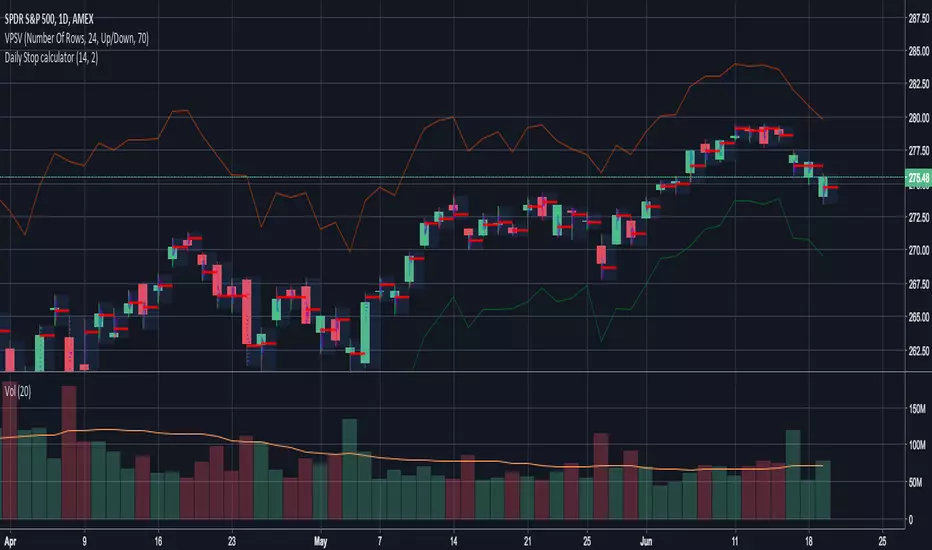
ATR Stop Loss LONG/SHORT by melihgulerYou can monitor the stop loss level according to ATR in 2 ways (Long/Short).
RSI + EMA+ MTF Stop-LossThis is a simple RSI with multiple MTF (No security) to help with direction short and long-term.
The rsi for the current chart has a noise reduction, while the rest are based on ma's.
I have supplied an extra flexible mtf rsi ma for potential adjustable/long-term stop-loss or direction identification.
Enjoy
RSI Stop LossExperiment for using RSI as a stop loss value, shows where the price will be when the RSI increases or decreases by a specified amount.
poki buy and sell Take profit and stop lossThis indicator is based on modelius model of lazy bear weis model with ATR for the buy=B sell =S
in addition there is Take profit and stop loss in % both for short and for long
next stage is to know the resistance level and support based on bollinger marked in blue and red dots
Also included Parabolic Sar (blue and red dots rising up or down)
The color of bulish or bearish zone is based on the cross of Hull avreage and linear regression ( for each time set may need different setting for accuracy )
So how to use this scrupt to better profit
1. if you have B signal and its on lower support level then its good starting place for buy. look at the Parabolic Sar if its in agreement. The exit can be either by S =sell, Take profit that you decide on % or by end of Parabolic SAR upward
2. exact the oposite for short
Play with setting for the desired results or change modify this script for your purpose
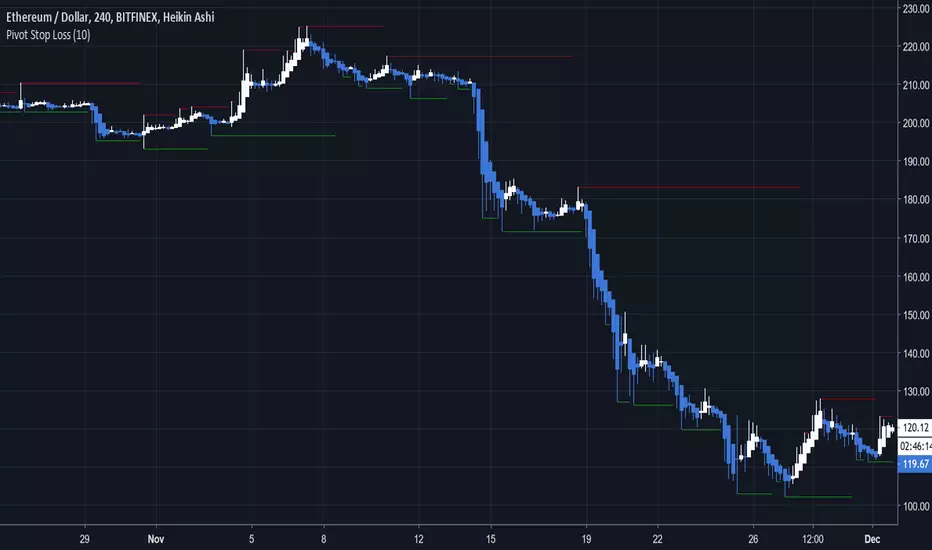
Pivot Stop LossHere we intend to use pivot points for stop loss and take profit. This has the added benefit of helping you to visualize support and resistance levels.
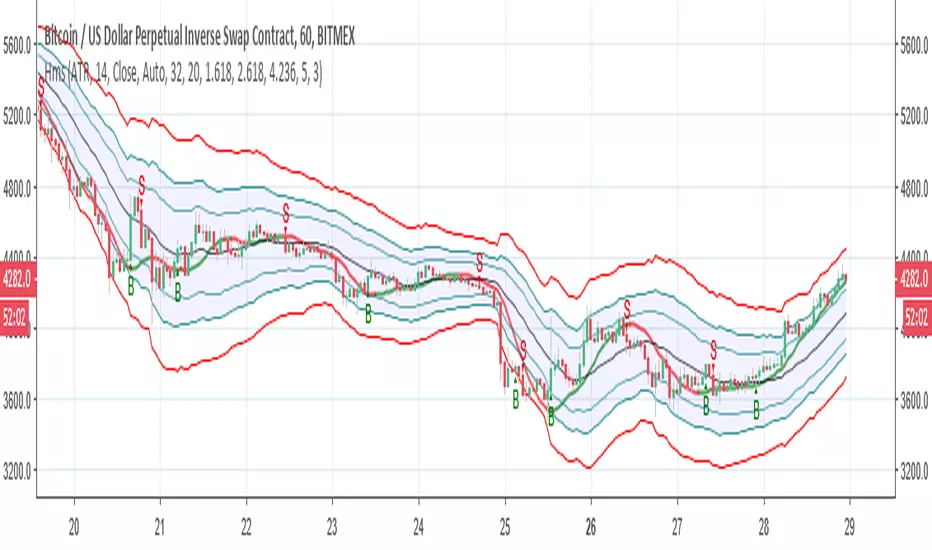
Hull modelius take profit and stop lossThis model has Hull moving average, fibs in form of Bollinger ,SMA and Modelius model with ATR for buy and sell power based on weis volume. Inside alerts for buy and sell. take profit and stop loss for both longs and shorts
so have fun
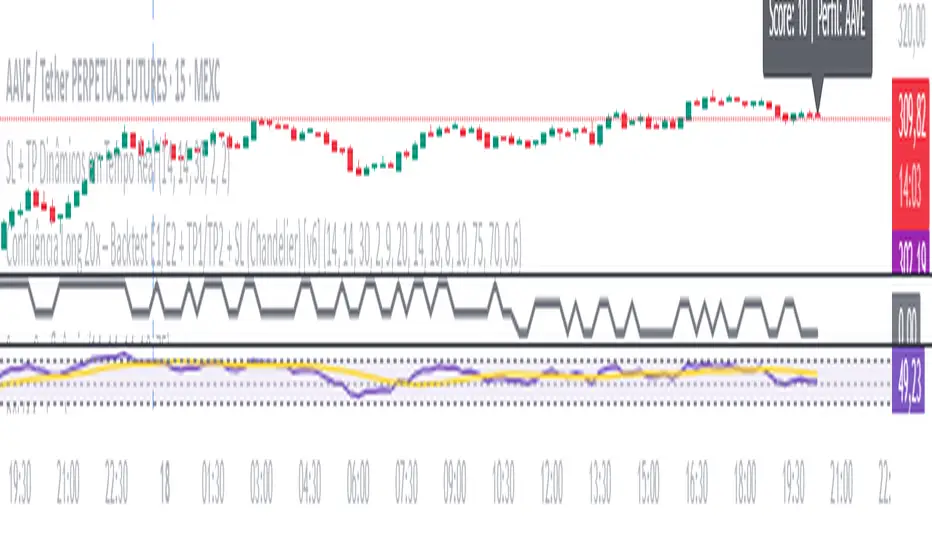
SL + TP Dynamics - By M.LolasStop Loss e Take Profit dinâmicos para operações semiautomatizadas.
By M.Lolas
STOP-LOSS-RSI with Edge-Preserving Filter Strategy V2Modified RSI strategy with entry and exit points.
I have allowed for High and Low risk for anyone interested in using it (NO GUARANTEES. DO YOUR OWN RESEARCH).
I will later consider incorporating the standard RSI for exit points. I am sure returns will increase based on current test runs :)
Returns look good based on the strategy result.
ABCD Harmonic Pattern Strategy (Bull + Bear) This script is a strategy implementation of the classic ABCD Harmonic Pattern, designed for market structure analysis, backtesting, and educational research.
The ABCD pattern is one of the foundational harmonic price patterns in technical analysis. Its Fibonacci ratio relationships were formalized and standardized within harmonic trading theory by Scott M. Carney, whose work helped define modern harmonic pattern rules.
This strategy is conceptually inspired by educational ABCD pattern logic shared by the TradingView author theEccentricTrader.
The code, structure, execution logic, filters, and risk management have been independently developed, reconstructed, and extended into a complete TradingView strategy.
What this strategy does
Detects bullish and bearish ABCD harmonic patterns based on price structure and Fibonacci ratios.
Reconstructs ABCD market structure logic for both directions instead of using a simple visual inversion.
Draws the ABCD legs, structure labels (A, B, C, D), and projection levels directly on the chart.
Generates long and short trade entries using confirmed ABCD structures.
Includes optional confluence filters, such as:
Higher-timeframe EMA trend filter
RSI strength filter
ATR volatility filter
Volume confirmation
Candle body confirmation
Minimum bounce distance from point D
Provides built-in risk management, including:
Configurable Stop Loss
Configurable Take Profit
Optional trailing stop
Designed for backtesting, parameter optimization, and analytical research.
Why this strategy is different
This script is not a simple indicator conversion nor a basic bullish/bearish mirror.
The ABCD pattern logic has been recreated at the structural level to better reflect how bullish and bearish market formations behave in real price action.
Key differences
Reconstructed bullish and bearish structures
Bullish and bearish ABCD patterns are independently defined using market structure logic, not just inverted visually.
Each direction has its own pivot relationships and validation rules to produce a more faithful representation of the ABCD pattern.
Structure-aware pattern validation
Pattern confirmation is based on price swings, structure continuity, and Fibonacci alignment, helping reduce distorted or forced patterns.
Strategy-based execution
Unlike indicator-only ABCD tools that only visualize patterns, this script uses strategy.entry and strategy.exit, enabling full backtesting and performance analysis.
Confluence-driven entries
Trade entries can require multiple confirmation layers beyond the pattern itself, helping reduce low-quality signals and overtrading.
Integrated risk management
Stop Loss, Take Profit, and optional trailing logic are applied consistently for both long and short positions.
Non-repainting design
Pattern detection and entries rely on confirmed bars (barstate.isconfirmed) and higher-timeframe data with lookahead_off, ensuring signals do not repaint historically.
Improved and controlled visualization
Pattern drawings, projections, and entry markers are managed with strict object limits to comply with TradingView performance and publishing requirements.
How to use
Add the strategy to a chart and select a symbol and timeframe.
Enable or disable filters under “Entry Filters (Confluence)”.
Configure Stop Loss, Take Profit, and trailing behavior under “TP/SL”.
Use pattern drawings and entry markers as visual and analytical confirmation, not as standalone trade signals.
Important notes
This script is provided for educational and research purposes only.
It does not provide financial or investment advice.
No profitability or performance is implied or guaranteed.
Past performance does not indicate future results.
Always test across multiple markets and timeframes and apply proper risk management.
Credits
ABCD Harmonic Pattern: Harmonic trading principles as formalized by Scott M. Carney.
Conceptual inspiration: Educational ABCD pattern logic shared by @theEccentricTrader on TradingView.
Pattern reconstruction, strategy logic, and risk management: Independent development.
Volume Profile + POC v2.0 [v6]Volume Profile + POC v2.0 - Professional Market Structure Analysis
━━━━━━━━━━━━━━━━━━━━━━━━━━━━━━━━━━━━━━━━━━━━━━━━━━━━
🎯 OVERVIEW
A professional-grade Volume Profile indicator that visualizes WHERE the market has traded, not just WHEN. By displaying volume distribution across price levels, you can identify the "center of gravity" where institutional players have positioned themselves.
This indicator is essential for:
- Finding high-probability support/resistance levels
- Understanding market structure and auction theory
- Identifying breakout vs. mean-reversion setups
- Spotting institutional accumulation/distribution zones
━━━━━━━━━━━━━━━━━━━━━━━━━━━━━━━━━━━━━━━━━━━━━━━━━━━━
📚 WHAT IS VOLUME PROFILE?
Traditional volume indicators show volume over TIME (vertical bars below the chart). Volume Profile shows volume over PRICE (horizontal bars on the side).
Think of it this way:
- Time-based volume: "How much was traded today?"
- Price-based volume: "At which prices did traders agree to transact?"
This shift in perspective reveals WHERE the market considers "fair value" and WHERE price is likely to find support or resistance.
━━━━━━━━━━━━━━━━━━━━━━━━━━━━━━━━━━━━━━━━━━━━━━━━━━━━
📊 KEY COMPONENTS
▸ POC (Point of Control)
The single price level with the HIGHEST traded volume within the lookback period.
Why it matters:
- POC acts as a "magnet" - price tends to revisit this level
- Represents the "fair value" agreed upon by buyers and sellers
- Strong POC = strong support/resistance
- When price deviates far from POC, mean-reversion probability increases
Trading application:
- Long when price pulls back to POC from above
- Short when price rallies to POC from below
- Use POC as a target for counter-trend trades
▸ Value Area (VA)
The price range containing 70% (configurable) of total volume.
- VAH (Value Area High): Upper boundary - acts as resistance
- VAL (Value Area Low): Lower boundary - acts as support
Trading application:
- Price inside VA: Range-bound, mean-reversion strategies work
- Price outside VA: Trending, breakout strategies work
- VA expansion: Increasing participation, strong trend
- VA contraction: Decreasing participation, consolidation
▸ HVN (High Volume Nodes)
Price levels with significantly higher volume than surrounding areas.
Characteristics:
- Act as strong support/resistance
- Price tends to "stick" at these levels
- Represent areas of high agreement between buyers and sellers
- Displayed in GOLD color for easy identification
▸ LVN (Low Volume Nodes)
Price levels with significantly lower volume than surrounding areas.
Characteristics:
- Price moves QUICKLY through these zones
- Act as "air pockets" - little resistance to price movement
- Often found between two HVNs
- Displayed in GRAY color
Trading application:
- When price enters LVN, expect fast movement to next HVN
- LVN breakouts can be explosive
- Use for target placement (price will likely accelerate)
━━━━━━━━━━━━━━━━━━━━━━━━━━━━━━━━━━━━━━━━━━━━━━━━━━━━
🎨 VISUAL FEATURES
▸ Bull/Bear Volume Separation
Green bars: Volume from bullish candles (close > open)
Red bars: Volume from bearish candles (close < open)
This helps identify:
- Accumulation zones (predominantly green at lows)
- Distribution zones (predominantly red at highs)
- Absorption (high volume with little price movement)
▸ Clean Professional Display
- Bold POC line with clear label
- Dashed VAH/VAL lines
- Semi-transparent profile bars (non-intrusive)
- Information table showing current settings
━━━━━━━━━━━━━━━━━━━━━━━━━━━━━━━━━━━━━━━━━━━━━━━━━━━━
⚙️ SETTINGS GUIDE
| Parameter | Default | Range | Description |
|-----------|---------|-------|-------------|
| Lookback | 100 | 20-500 | Bars to analyze |
| Price Divisions | 24 | 10-50 | Granularity of profile |
| Profile Width | 10 | 5-30 | Visual width of bars |
| Value Area % | 70 | 50-95 | Standard is 70% |
Recommended settings by timeframe:
- Scalping (1-5min): Lookback 50-100, Divisions 30-50
- Day Trading (15-60min): Lookback 100-200, Divisions 20-30
- Swing Trading (4H-Daily): Lookback 200-500, Divisions 15-24
━━━━━━━━━━━━━━━━━━━━━━━━━━━━━━━━━━━━━━━━━━━━━━━━━━━━
📈 PRACTICAL TRADING STRATEGIES
Strategy 1: POC Bounce
1. Wait for price to approach POC
2. Look for rejection candle (pin bar, engulfing)
3. Enter in direction of rejection
4. Stop loss beyond POC
5. Target: Opposite side of Value Area
Strategy 2: Value Area Breakout
1. Price breaks above VAH or below VAL
2. Wait for retest of broken level
3. Enter on successful retest (level holds)
4. Stop loss inside Value Area
5. Target: 1x or 2x Value Area width
Strategy 3: LVN Fast Move
1. Identify LVN between two HVNs
2. When price enters LVN, expect acceleration
3. Trade in direction of momentum
4. Target: Next HVN
5. Tight stop (LVN moves are fast)
━━━━━━━━━━━━━━━━━━━━━━━━━━━━━━━━━━━━━━━━━━━━━━━━━━━━
🔔 ALERTS
- POC Touch: Price reaches the Point of Control
- Value Area Break: Price exits the Value Area
Use alerts to catch high-probability setups without watching the chart constantly.
━━━━━━━━━━━━━━━━━━━━━━━━━━━━━━━━━━━━━━━━━━━━━━━━━━━━
【日本語解説】
■ Volume Profile(出来高プロファイル)とは
従来の出来高は「いつ」取引されたかを示します。Volume Profileは「どの価格で」取引されたかを示します。
これにより、市場参加者が「適正価格」と考えている水準が可視化されます。
■ 主要コンポーネント
【POC(Point of Control)】
最も出来高が多い価格帯。市場の「重心」です。
- 価格はPOCに引き寄せられる傾向がある
- POCからの乖離が大きいほど、回帰の可能性が高まる
- 強いサポート/レジスタンスとして機能
【Value Area(バリューエリア)】
出来高の70%が集中する価格帯。
- VAH(上限):レジスタンスとして機能
- VAL(下限):サポートとして機能
- VA内:レンジ相場 → 逆張り有効
- VA外:トレンド相場 → 順張り有効
【HVN(高出来高ノード)】
出来高が特に多い価格帯(金色で表示)
- 強いサポート/レジスタンス
- 価格が「粘る」傾向
【LVN(低出来高ノード)】
出来高が少ない価格帯(灰色で表示)
- 価格が急速に通過する
- ブレイクアウト時の加速ゾーン
■ 実践的トレード戦略
戦略1:POCバウンス
価格がPOCに接近 → 反転サイン確認 → 反転方向にエントリー
戦略2:バリューエリアブレイク
VAH/VAL突破 → リテスト待ち → ブレイク方向にエントリー
戦略3:LVN高速移動
価格がLVNに入る → 次のHVNまで高速移動を狙う
■ 推奨設定(時間足別)
- スキャルピング(1-5分):Lookback 50-100
- デイトレード(15-60分):Lookback 100-200
- スイング(4H-日足):Lookback 200-500
━━━━━━━━━━━━━━━━━━━━━━━━━━━━━━━━━━━━━━━━━━━━━━━━━━━━
⚠️ DISCLAIMER
This indicator is designed for educational and analytical purposes. Volume Profile shows historical data and does not predict future price movements. Always use proper risk management and combine with your own analysis.
━━━━━━━━━━━━━━━━━━━━━━━━━━━━━━━━━━━━━━━━━━━━━━━━━━━━
Developed by EduVest | 30 Years of STEM Education × Professional FX Trading
For custom indicator development, visit my profile.